
Understanding Rock of Cashel history
Rock of Cashel history begins with its role as a royal centre associated with the kings of Munster. The Eóganacht and, later, the Dál Cais around Brian Boru belong to that story. The surviving silhouette, however, is largely a church ensemble: a round tower, a Romanesque chapel, a Gothic cathedral and buildings connected with the cathedral community. Royal associations explain the site's significance without turning these remains into an intact royal palace.
Christian use predates the transfer of the Rock to the Church. Excavations beside Cormac's Chapel revealed evidence of a wooden church and cemetery by the ninth or tenth century. That earlier religious presence helps explain why the site's history is more complicated than a simple switch from kings to clergy. For practical access to the monuments described here, see tickets and visit options.
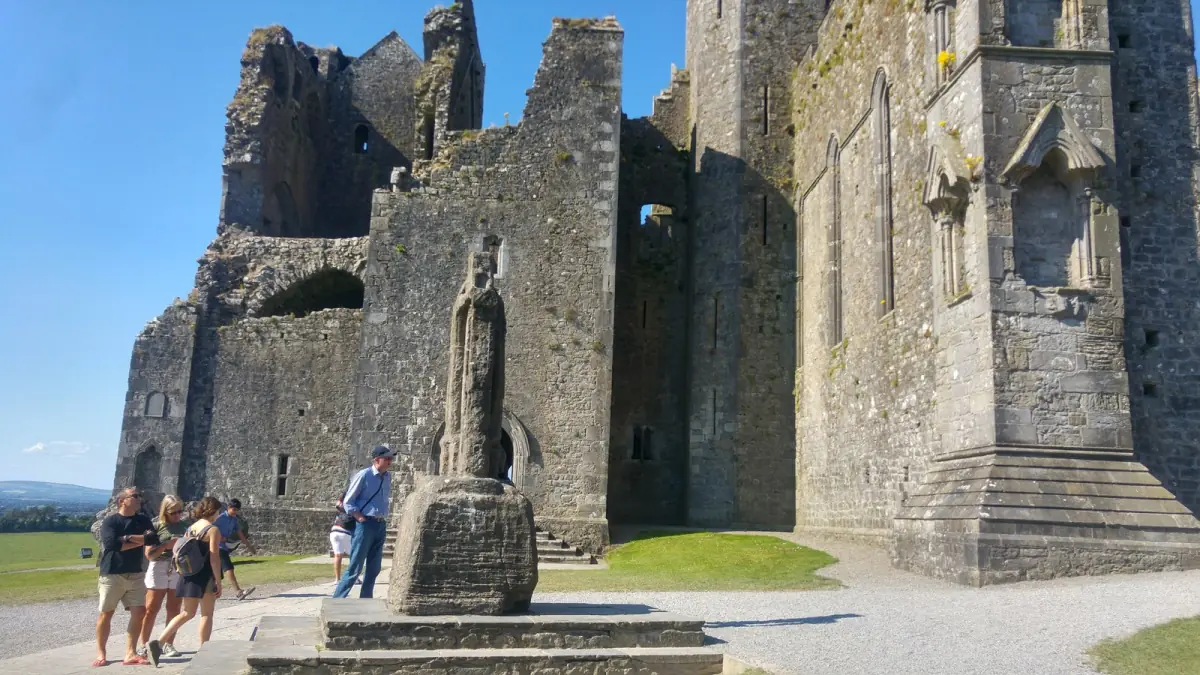
From the kings of Munster to an archbishop's seat
In 1101 Muirchertach Ua Briain gave the Rock to the Church. It subsequently became an archiepiscopal seat for the ecclesiastical province of Munster. The donation is a useful turning point when reading the site: royal authority forms the background, while the surviving stone buildings tell much of the later ecclesiastical story. Keep both strands in view rather than searching for a single castle that contains the whole past.
The account of Patrick converting King Aenghus belongs to legend. It is part of the way the Rock has been remembered, but should be understood separately from the building dates and the recorded transfer of 1101. On a visit, distinguishing legend, political history and surviving architecture makes the place easier to read without stripping away its associations.
A journey via the Rock
This three-day journey reaches Cashel on day one; Rock admission is extra.
Hand-picked tours, booked through GetYourGuide. Prices are indicative starting prices in euros (as of October 2026). Tap a tour for live availability and the current price in your currency.
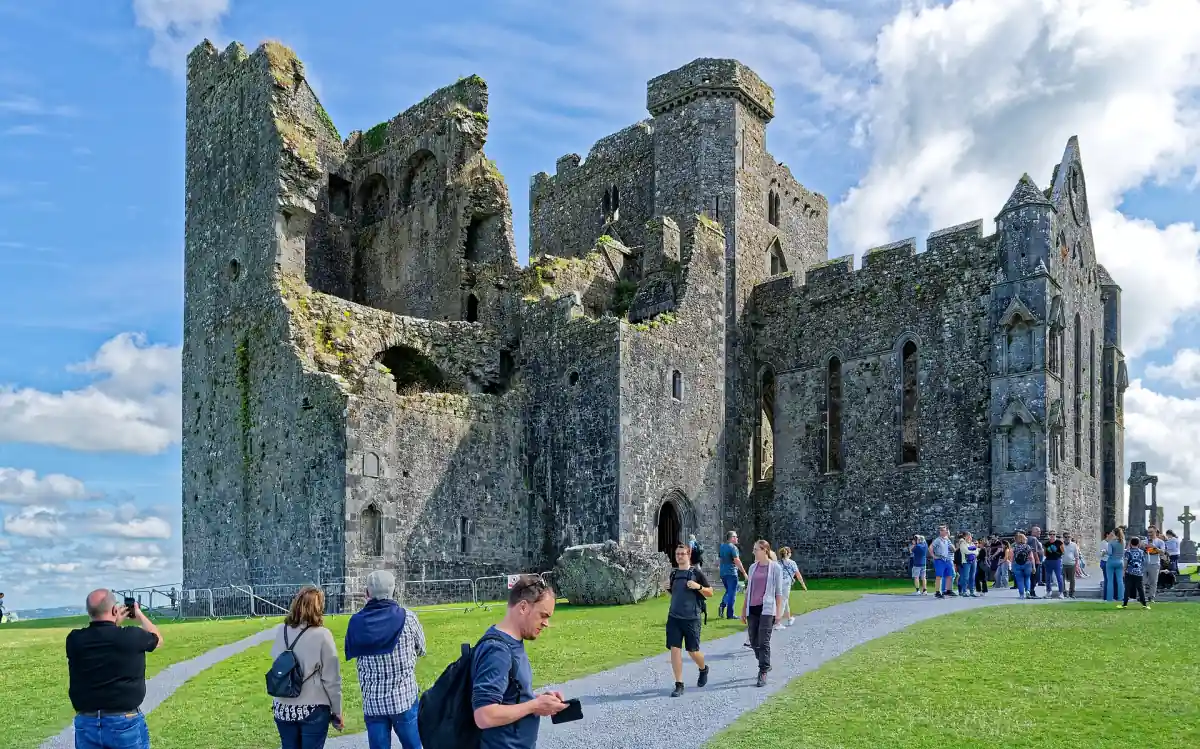
A three-day journey with a Cashel stop
Visit Cashel on day one of a driver-guide itinerary in a sixteen-seat minicoach, with two B&B nights. Admission to the Rock is extra.
Architecture through successive building phases
The round tower is the oldest surviving building and belongs to around 1100. Look at it as an early part of the ensemble, then compare it with Cormac's Chapel. King Cormac Mac Cárthaigh began the chapel in 1127 and it was consecrated in 1134. Its Romanesque design includes a nave and chancel, flanking towers, decorated portals, blind arcading and vaulting. The chapel guide deals with its wall paintings and conservation in more detail.
The cathedral belongs to a later architectural phase. It is a cruciform Gothic church without aisles. The OPW visitor guide describes construction around 1230 to 1270 and later alterations, including a tower in the 15th century. Comparing the cathedral's scale and plan with the chapel is more informative than treating every surviving wall as contemporary.
The restored Hall of the Vicars Choral is another 15th-century element. It served the community of laymen and clerics responsible for liturgical singing. This building adds the everyday organisation of worship to the story told by the major churches. The cross pictured on this page is a replica, so use it as a visual part of the outdoor setting rather than as a promise of access to the original cross.
Damage, changing use and conservation
The historical account in the OPW visitor guide records the sack by Lord Inchiquin in 1647, use by the Church of Ireland until 1749, and state conservation work in 1875. These dates describe changes in the monument's past. They help explain why a visit now involves ruins, restored elements and conservation rather than a complete working medieval cathedral.
For a first visit, follow the building sequence as a reading aid: early tower, Romanesque chapel, Gothic cathedral and the later hall. This is an architectural comparison rather than a prescribed access route. The opening-hours guide separates general tours from chapel access, while the tour comparison explains ways to reach Cashel with a guide.
The three-day journey offered here stops in Cashel on day one and includes a driver-guide, minicoach transport and two bed-and-breakfast nights. It suits a wider itinerary with a monument stop; budget separately for Rock admission. For an independent visit, decide whether the general site tour or your own reading of the buildings better fits your available time.
Questions about the Rock's past
Did church use begin with the donation?
It has royal associations, but a wooden church and cemetery existed before the gift to the Church in 1101.
Which surviving building is oldest?
The round tower dates to around 1100. Cormac's Chapel was consecrated in 1134, before the main Gothic cathedral phase.
Is Patrick's conversion of Aenghus historical fact?
The story is presented as a legend. Keep it separate from the documented donation and building chronology.